Choosing kitchen cabinet materials involves more than deciding how the doors should look. The material inside each cabinet also affects its weight, finish, maintenance needs, and suitability for different parts of the kitchen.
Solid wood, plywood, and MDF can all be used in well-made cabinetry. The right choice depends on where the material is used, the appearance you want, and how the cabinet is constructed.
For many kitchens, a combination is worth considering: plywood for cabinet boxes, MDF for smooth painted doors, and solid wood where natural grain is a priority. Understanding these different roles makes it easier to compare quotations and choose cabinets that fit your home.
Start with the Cabinet Box and Door
Before comparing materials, separate the cabinet into its main components.
The cabinet box, sometimes called the carcass, forms the structure. It includes the sides, bottom, top or supporting rails, and back. Its construction affects how the cabinet supports shelves, drawers, and everyday storage.
The cabinet doors and drawer fronts create most of the visible appearance. Their material influences the finish, weight, and design details.
Shelves, drawer boxes, and decorative panels may use additional materials. A kitchen described as having “solid wood cabinets,” for example, may have solid wood doors with plywood boxes.
When requesting a quotation, ask the supplier to identify the material used for each component.
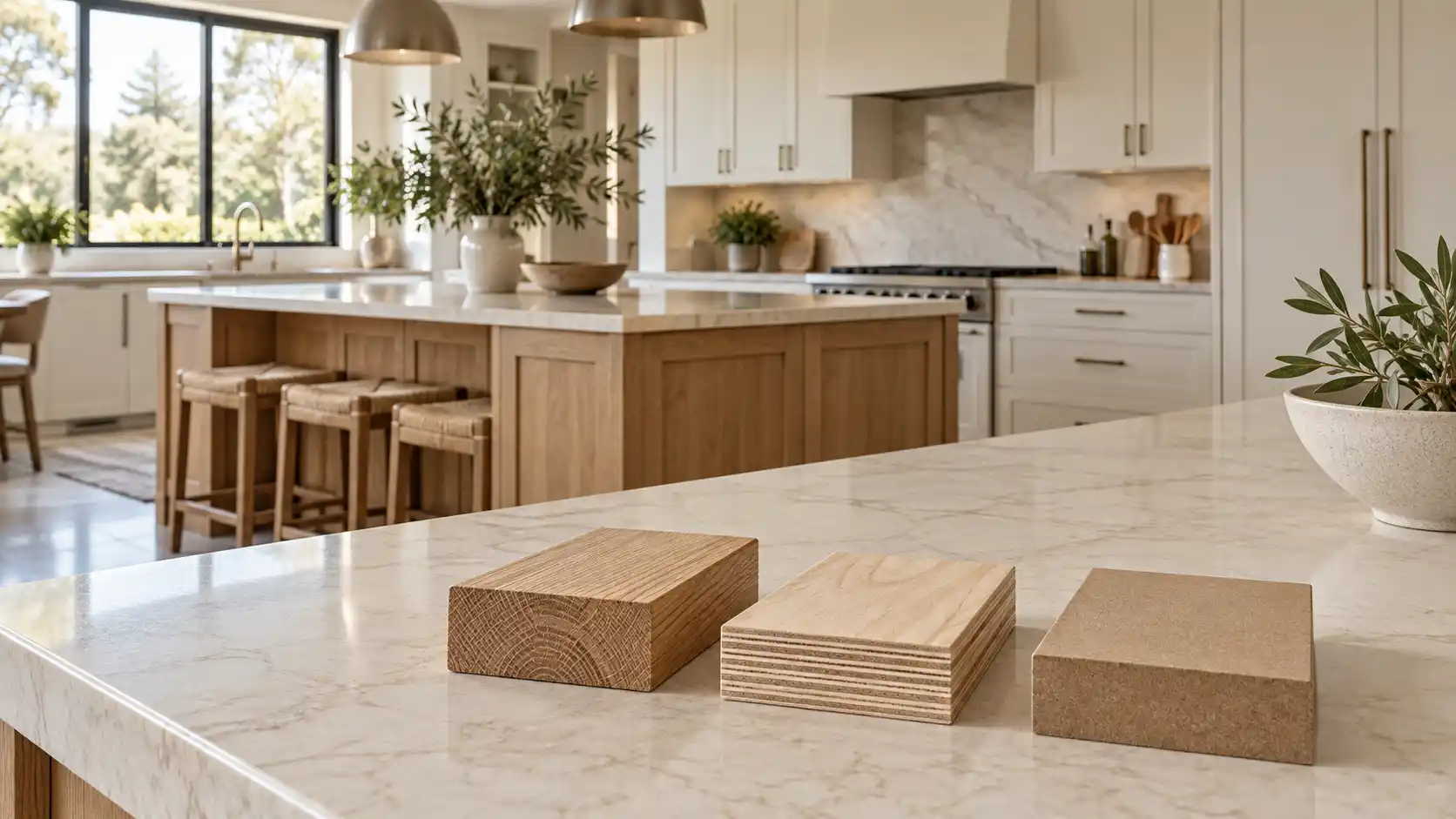
Solid Wood, Plywood, and MDF at a Glance
| Material | Common Cabinet Applications | Main Advantages | What to Check |
|---|---|---|---|
| Solid wood | Doors, door frames, decorative panels, and trim | Natural grain, distinctive appearance, and options for refinishing | Wood species, moisture movement, construction, and finish |
| Plywood | Cabinet boxes, shelves, and drawer components | Cross-layered construction and a useful balance of strength and weight | Core quality, thickness, bonding specification, and exposed edges |
| MDF | Painted doors, drawer fronts, and decorative panels | Smooth surface and consistent texture for painted finishes | Grade, edge sealing, panel weight, and moisture exposure |
The material name is only a starting point. Panel quality, cabinet construction, finishing, and installation all influence the final result.
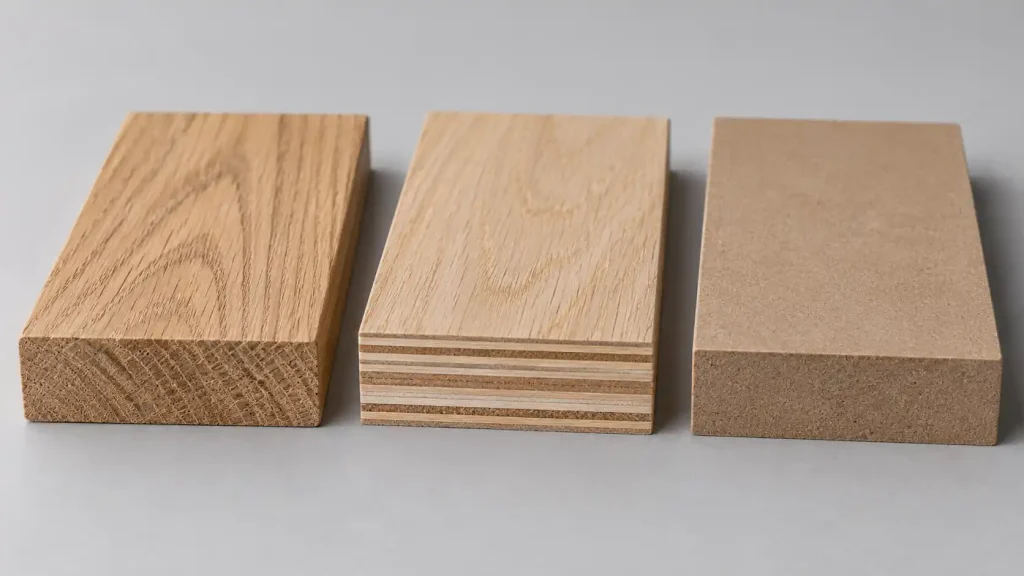
Solid Wood: Best Considered for Natural Grain
Solid wood is an appealing option when you want the character of real timber to remain visible.
Each piece has its own grain and color variation. These differences can give stained or clear-finished cabinet doors a warmer, more individual appearance.
Solid wood can suit both traditional and contemporary kitchens. A detailed framed door creates a different effect from a simple design with a restrained natural finish.
Where Solid Wood Works Well
Solid wood is commonly used for:
- Cabinet door frames and selected door designs
- Visible decorative elements
- Moldings and trim
- Features where natural grain is part of the design
It does not need to be used throughout every cabinet to achieve a wood-focused kitchen. Combining solid wood fronts with suitable panel materials for the boxes is another option.
Allow for Natural Movement
Wood responds to changes in humidity by expanding and contracting. Cabinet design and construction need to accommodate that movement.
This is particularly relevant to doors, joints, and larger wooden components. A protective finish helps manage moisture exchange, but it does not stop movement entirely.
Before ordering, review a finished sample and ask how the proposed door construction accommodates normal changes in indoor conditions.
Clarify What “Solid Wood” Includes
A wood appearance does not always mean solid timber. It may also come from a real wood veneer, laminate, or another decorative finish.
Ask whether the quotation includes solid wood throughout the door, a solid wood frame with a different center panel, or a veneered panel. These constructions can look similar while differing in cost and behavior.
Consider solid wood when visible natural grain and the character of timber are central to your kitchen design.
Plywood: A Practical Option for Cabinet Boxes
Plywood consists of thin wood veneers bonded together, typically with the grain direction alternating between layers.
This construction helps limit the movement associated with solid wood and makes plywood a practical option for cabinet structures.
It is often considered for cabinet boxes, shelves, and drawer components, where support and stability matter more than a decorative surface.
Check the Panel Specification
Not all plywood has the same construction or quality. Panels can differ in thickness, veneer quality, internal gaps, bonding system, and surface finish.
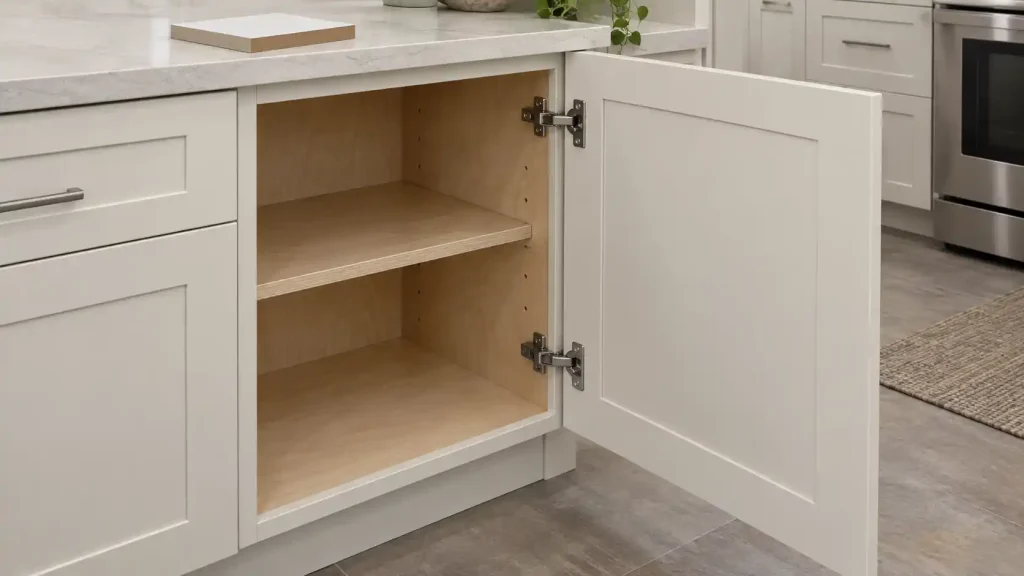
When comparing cabinets, ask about:
- The thickness of the sides, shelves, and back panels
- The plywood core and intended application
- How the cabinet parts are joined
- How visible and exposed edges are finished
- Whether shelf dimensions suit the intended storage load
A cabinet’s performance depends on how these details work together. The word “plywood” alone does not describe the complete product.
Pay Attention to Sink Cabinets
Plywood should not automatically be treated as waterproof.
Even when a panel has a bonding specification suited to moisture exposure, the wood itself still needs appropriate protection. Leaks, standing water, and unfinished cutouts can create problems.
For sink cabinets, ask how plumbing openings, panel edges, and joints will be finished. Installation should also allow access to plumbing so that leaks can be identified and repaired.
Consider plywood for cabinet boxes when the panel specification, construction, and edge finishing are clearly defined.
MDF: A Strong Option for Painted Cabinet Doors
MDF stands for medium-density fiberboard. It is made from wood fibers combined with a bonding system and pressed into panels.
Its uniform surface has no natural knots or visible wood grain, making it useful for smooth painted finishes. It can also be machined into decorative profiles.
For white, gray, beige, or other painted kitchens, MDF is a material worth considering for doors and drawer fronts.
Why MDF Suits Painted Designs
MDF provides a consistent base for flat doors and routed designs. This can help create a uniform appearance across a run of cabinets.
However, the finished result still depends on surface preparation, coating quality, and edge treatment. A smooth panel does not guarantee a durable painted door.
Inspect a finished sample from the front, back, and side. Pay attention to corners, routed details, and the consistency of the coating around the edges.
Standard MDF and Moisture-Resistant MDF Are Different
Ask which grade is included in the quotation.
Moisture-resistant MDF is designed to perform better than standard MDF in specified humid interior conditions. It should still not be described as waterproof.
Both the panel grade and the complete finishing system matter. Exposed edges, cutouts, and prolonged contact with water remain important considerations.
Match Door Weight with Hardware
MDF is generally heavier than veneer-core plywood. For larger doors, the dimensions, panel weight, and hinge specification should be considered together.
Ask the supplier how the proposed hardware suits the size and construction of the doors.
Consider MDF when a smooth painted appearance is the priority, with the panel grade, finish, and hardware confirmed before ordering.
Which Material Combination Suits Your Kitchen?
You do not need to choose one material for every component. A combination can match different materials to different jobs.
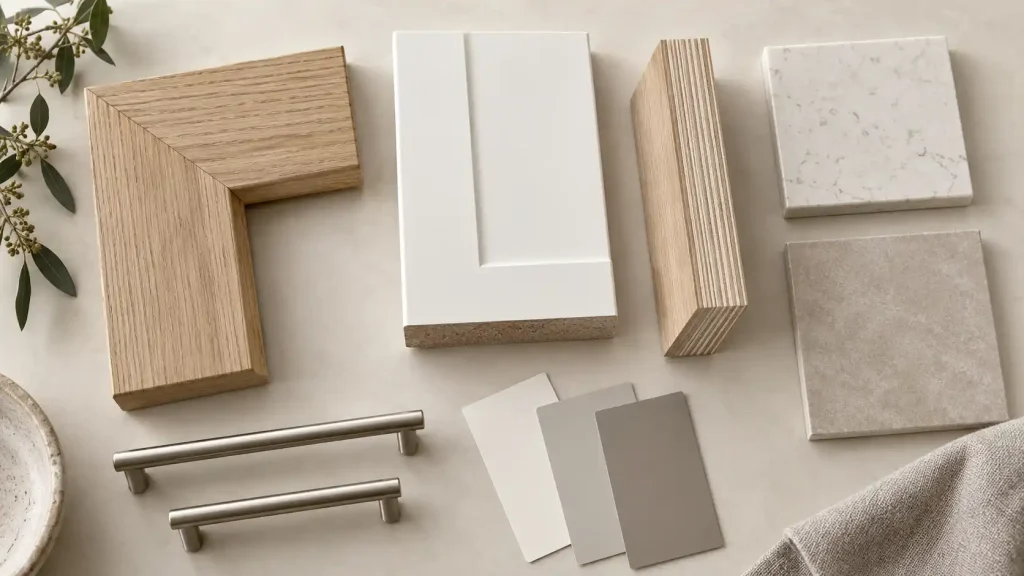
For a Smooth Painted Kitchen
Plywood boxes with MDF doors and drawer fronts are one combination to evaluate.
The plywood provides the cabinet structure, while the MDF creates a consistent surface for painting. Review the complete specification, including door finishing, exposed edges, and hardware.
For a Natural Wood Kitchen
Solid wood or wood-veneered fronts can be combined with plywood boxes.
This approach places the visible wood finish where it contributes most to the design. Ask to see samples together so you can assess grain direction, color variation, and the relationship between doors and decorative panels.
For Areas Exposed to Moisture
Start by identifying where moisture is likely to occur: around the sink, near the dishwasher, and at plumbing connections.
Then review panel suitability, protective finishes, edge treatment, and installation details. Material selection should be supported by ventilation, prompt spill cleanup, and accessible plumbing.
For a More Controlled Budget
Compare complete cabinet specifications rather than material names alone.
A simple door design with a well-specified finish may offer a more suitable balance than an elaborate design that leaves less budget for hardware or construction quality.
Prioritize the features that affect everyday use, then decide where decorative upgrades matter most.
What Really Changes the Cabinet Price?
The core material is only one part of the quotation.
Other factors include cabinet dimensions, door design, surface finish, hardware, storage accessories, and customization. Packaging, delivery, and installation scope can also affect the total purchase cost.
Two quotations are difficult to compare if one includes drawer organizers, finished end panels, and upgraded hinges while the other does not.
Request an itemized specification showing:
- Materials for the cabinet boxes, doors, shelves, and drawer boxes
- Panel thicknesses
- Door style and finish
- Hinges, drawer runners, and storage accessories
- Decorative panels and trim
- Packaging, delivery, and installation scope
This makes the differences between suppliers easier to understand.
Questions to Ask Before Ordering
Before confirming your kitchen cabinets, ask the supplier:
- What material is used for each cabinet component?
- What panel grade and thickness are included?
- How are edges, joints, and plumbing cutouts protected?
- Can I review a finished door sample?
- Which hinges and drawer runners are specified?
- What product documentation is available?
- What does the warranty cover, and what maintenance is required?
For an overseas order, also confirm the approved drawings, packing details, and responsibilities for assembly and installation.
Frequently Asked Questions
Is Solid Wood Better Than MDF for Kitchen Cabinets?
It depends on the component and the finish you want. Solid wood is appealing for natural grain, while MDF is useful for smooth painted doors. Neither material guarantees quality without suitable construction and finishing.
Can Plywood Boxes Be Combined with MDF Doors?
Yes. Different materials can be used for the cabinet structure and visible fronts. The specification should identify each component clearly and include suitable finishes and hardware.
Is Moisture-Resistant MDF Waterproof?
No. Moisture-resistant MDF still needs appropriate finishing and should be protected from leaks, standing water, and prolonged wetting.
Does a Wood-Grain Door Mean It Is Solid Wood?
No. The appearance may come from solid wood, real wood veneer, or a decorative surface. Ask the supplier to specify both the surface and the underlying material.
Which Material Offers the Best Value?
Value depends on the complete cabinet, including its construction, finish, hardware, and suitability for your kitchen. Compare equivalent specifications and finished samples before deciding.
Plan Your Kitchen Cabinets with George Materials
Choosing kitchen cabinet materials becomes easier when the layout, appearance, and budget are considered together.
George Materials can help you explore cabinet options for your home and discuss suitable combinations of cabinet boxes, doors, finishes, and storage features.
To prepare for a quotation, share your floor plan, project location, preferred style, appliance dimensions, and estimated budget. Reference images can also help communicate the colors and finishes you want.
Contact George Materials to discuss your kitchen cabinet requirements and request a quotation.